
Picking up a Gold Screen in the Commercial category at the YDA, as well as a Cannes Lions Grand Prix, SMUGGLER director Olivia de Camps’ spot for The Ordinary defies usual beauty commercial conventions. Here, she talks about bucking trends, taking chances and winning big.
What was the inspiration behind The Periodic Fable, and when you saw the script, did you know immediately how you wanted to approach it?
Very much so. I remember reading the brief and having an almost physical reaction. It wasn’t just, “I’d really like to do this.” It was more like, “Oh, I have to make this,” which doesn’t happen very often. It honestly felt like a dream job. I could immediately see the entire world of the film in my head. And as soon as I got off the first call with [Uncommon creatives] Ellie [Daghlian], Elisa [Czerwenka], Ali [Dickinson] and Jake[Haynes], I told Smuggler, “I need to do this job with these people.”
You could instantly tell we were all on the same page. What I loved was that the idea already had a real point of view. It was a beauty brand pointing out the absurdity of beauty culture, which is quite brave. A lot of people say they want provocative work, but actually standing behind it all the way through is another thing. I kept thinking about all those ‘get ready with me’ videos of skincare routines where there’s always another step and another product you need to buy. You open TikTok feeling completely fine about your face, then five minutes later you’re deeply concerned about your skin barrier. The Ordinary felt like the adult in the room saying, “Hey, you don’t actually need all of this…”
My first thought was that the movement should feel precise and seductive, like a ritual you’d want to copy, then become increasingly mechanical and relentless. We didn’t just want to tell people that modern beauty culture is exhausting. We wanted them to physically feel exhausted by it, which is an unusual advertising strategy.
We didn’t just want to tell people that modern beauty culture is exhausting. We wanted them to physically feel exhausted by it.
The Ordinary – The Periodic Fable
Above: Olivia de Camps’ YDA-winning campaign for The Ordinary, The Periodic Fable.
What’s your background and your route into directing?
I came into directing through film and music videos, so I’ve always been drawn to storytelling through tone, movement and performance. I’m much more interested in making an audience feel something they can interpret than explaining an idea outright.
That’s how I approached this. When The Periodic Fable came along, I’d made films, music videos and a few commercials, and maybe not being completely trained in advertising conventions helped. I wasn’t asking myself how to make an advert, I was asking myself what this should make you feel, and how to create that feeling.
I really hope working more in advertising never trains that instinct out of me. I’d rather keep bringing filmmaking into advertising than learn how advertising is ‘supposed to work’.
I’ve always been drawn to storytelling through tone, movement and performance.

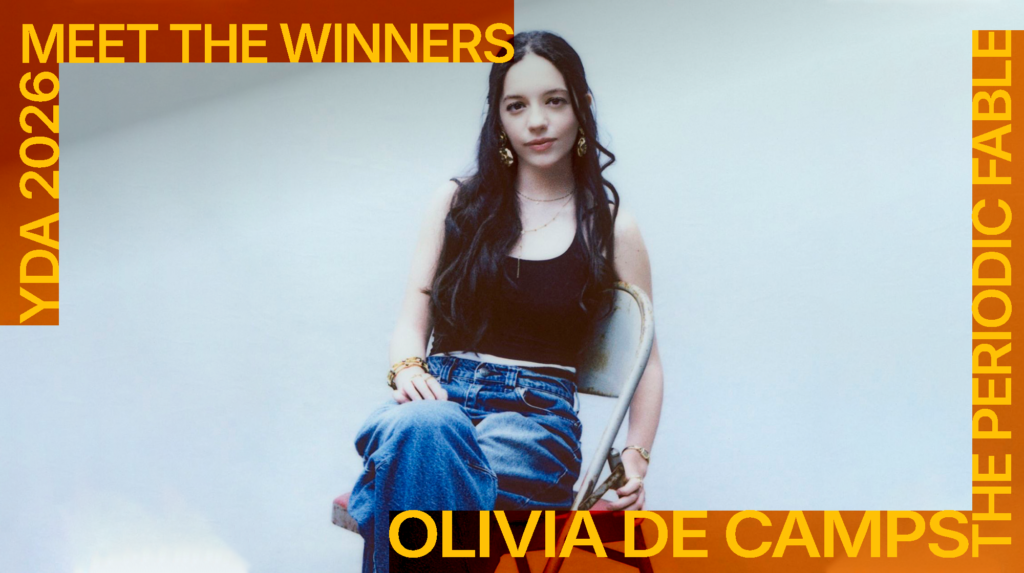
Above: Director Olivia de Camps.
The film has quite a stark, sci-fi feel to it. Why did that feel like the right approach?
I never really thought of it as sci-fi. I wanted to hold up a slightly warped mirror to beauty culture and the elaborate routines we’ve come to accept, so that what makes the film feel uncanny is recognising how true to reality it is.
We took these familiar beauty rituals and put them in a cold, repetitive, almost industrial world to make them feel like they’re part of a much bigger machine. I wanted the world to feel incredibly controlled because the behaviour inside it is so out of control. The more clinical the environment became, the more absurd the behaviours felt.
The film builds on this idea of accumulation of more products, more steps, more things to fix. Then The Ordinary vouches for reduction, which brings a sense of clarity and normalcy after all that chaos.
I wanted to hold up a slightly warped mirror to beauty culture and the elaborate routines we’ve come to accept.


Above: The Periodic Fable holds up “a slightly warped mirror to beauty culture”.
The sound design are integral to the film. Can you tell us about that and what you wanted to achieve?
We made the skincare application the soundtrack, which sounds slightly psychotic when I say it out loud. Sound was massive for me because I wanted the film to work on you physically, without music forcing an emotional response. We used a metronome when choreographing and shooting, so every gesture and application became part of this growing rhythm.
The sound design allowed us to heighten the absurdity. Eventually you become hyper-aware of every action, and hopefully you start feeling slightly trapped inside the routine yourself as the sound becomes more mechanical and obsessive. Then, when the pattern finally breaks, you actually feel the relief.
You’ve worked a lot in music videos. What did that teach you, and did you bring some of that sensibility to this project?
Definitely. I work with choreography a lot, and music videos have taught me to trust rhythm and movement over explanation. A gesture, a cut or a strange image can communicate a lot without telling the audience what to think.
That was especially important here because the film isn’t making its argument through dialogue. The choreography is the argument. Sometimes there’s a push in advertising to make every creative decision have a very neat verbal explanation. But I wanted the film to be funny, unsettling, beautiful and exhausting all at once, and let those things come through in the filmmaking rather than spelling them out.
We made the skincare application the soundtrack, which sounds slightly psychotic when I say it out loud.
What was the most challenging aspect of making The Periodic Fable?
Time, definitely. We shot the whole thing in twelve hours, with a cast of non-dancers doing extremely precise choreography, so there was a lot to achieve in one day. If something lasts half a second too long, it becomes boring. If it’s too short, you don’t feel the oppression of it. If someone performs it too broadly, suddenly it feels like comedy. If it becomes too elegant, you lose the ridiculousness… it was a very delicate balance to preserve the tone we were looking for.
Then the edit became another version of that. Álvaro [del Val] and I spent several days shaping it frame by frame, and obsessing over tiny fractions of a second because it was one of those films where rhythm really was everything.
What did you learn from making the spot?
To be bold, probably. And to trust what excited me about the idea in the first place. There are so many points where you can make something a little safer, and ten small decisions like that can completely change a film. This taught me that if you believe in an instinct, you have to go for it and pitch the weird idea.
And when you find the right creative people, something amazing happens when everyone starts pushing in the same direction. That was what happened with Ellie, Elisa, Ali and Jake. When everyone genuinely cares and trusts each other, you suddenly feel like you’re all seeing the same film in your heads. That flow state is probably my favourite part of making anything.
There are so many points where you can make something a little safer, and ten small decisions like that can completely change a film.

Above: “We took these familiar beauty rituals and put them in a cold, repetitive, almost industrial world to make them feel like they’re part of a much bigger machine.”
What are you working on at the moment, and what do you hope the future holds?
I’m directing quite a lot at the moment, mostly commercials, and I’m trying to keep choosing things that scare me a little bit. I don’t want to figure out what my ‘thing’ is and spend ten years making increasingly competent versions of it. I want to make bold work that feels new and risky, and actually makes people feel something.
I’m interested in discomfort, and using filmmaking as a way to give things we’ve normalised a double take. Advertising doesn’t always have to reassure us or make the world look nicer than it is.
Obviously, it’s very hard to make work like that consistently. You need trust, and you need people willing to take risks. But I hope I can keep finding those people and keep pushing ideas somewhere unexpected. Ideally, every project leaves me a little less certain about how to make the next one.
I’m interested in discomfort, and using filmmaking as a way to give things we’ve normalised a double take.

What does it mean to you to win at this year’s YDA?
So huge! The YDA feels especially meaningful because it recognises directors at the beginning of their careers. It’s a lovely feeling to be told that maybe those instincts are worth trusting. The YDA has basically told me, “Keep trusting the weird thought,” which is potentially dangerous encouragement. I know how many people had to take a chance on me for this film to exist. The Ordinary, Nils, Ellie, Elisa, Ali and Jake all trusted me before there was much reason to on paper. There was absolutely a universe where I completely fucked it up.
So, the award feels bigger than me. It belongs to everyone who backed something unusual before there was proof it would work. And maybe the most exciting part is knowing that people really do respond to work that feels risky. Sometimes the thing you’re most nervous about is exactly the thing that lands.
The Periodic Fable also won the Grand Prix in the Health & Wellness Lions. How did that news make you feel?
That was completely surreal as well. What means the most to me about the Grand Prix is that it recognises a bold swing. The client wanted to question the industry it exists within, the agency pushed it, and everyone kept choosing the stranger version rather than sanding off the edges.
The YDA has basically told me, “Keep trusting the weird thought,” which is potentially dangerous encouragement.
And I love that it won in Health & Wellness because, underneath all the choreography and absurdity, the film is really questioning the idea that we always need something new to fix about ourselves. That feels like an important message for a beauty brand to put out into the world.
Selfishly, it’s made me want to be even braver next time, which is probably terrible news for my producers.
Interview by Danny Edwards for shots
All images courtesy of shots